
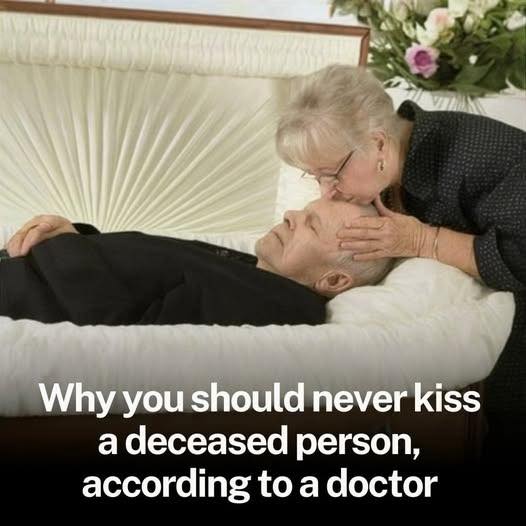
The final farewell is a delicate intersection of sacred tradition and biological reality, where the act of kissing a deceased loved one serves as a vital gesture of emotional closure. However, medical warnings from professionals like Dr. Viktor Ivanovik have sparked a debate regarding the potential hazards of the post-mortem microbiome.
Even after death, the body remains a biologically active environment where pathogens from virulent infections do not immediately vanish. Medical experts caution that bacteria and viruses can persist on the skin and mucosal surfaces, making physical contact a rare but scientifically documented risk for those who are grieving.
The clinical concern centers on the rapid proliferation of microorganisms once the body’s immune system is no longer active. In cases where death was caused by sepsis, meningitis, or contagious gastrointestinal infections, the concentration of harmful germs can be significant. Proponents of scientific vigilance argue that the metabolic collapse of the body makes it a potential site for secondary contagion, especially in the hours before professional sanitization or embalming takes place.
From this perspective, a final kiss is seen as an unnecessary gamble that could turn a place of mourning into a source of illness for the living.
Conversely, many cultures and faiths, including Eastern Orthodox and Catholic traditions, view the “last kiss” as a spiritual necessity that transcends clinical risk. For these mourners, the ritual is an essential psychological tool for processing loss, and the denial of tactile closure can lead to deep-seated unresolved grief. This clash between public health and human emotion was most evident during the COVID-19 pandemic, when strict restrictions left thousands of families unable to perform their traditional rites. The trauma of these restrictions highlighted how deeply the human psyche relies on physical touch to heal and acknowledge the reality of mortality.
Navigating this dilemma requires a “Mindful Farewell” that respects both scientific safety and the sanctity of mourning. By consulting with medical or funeral staff, families can determine the specific risks involved and find a middle ground, such as touching a loved one’s hand or using a symbolic barrier. As death has become more institutionalized in the modern era, society has developed a lower level of death literacy, making the biological realities of decomposition feel jarring.
Ultimately, the goal is to empower people with knowledge so they can perform their sacred traditions safely, ensuring that the power of human attachment is honored without compromising public health.