
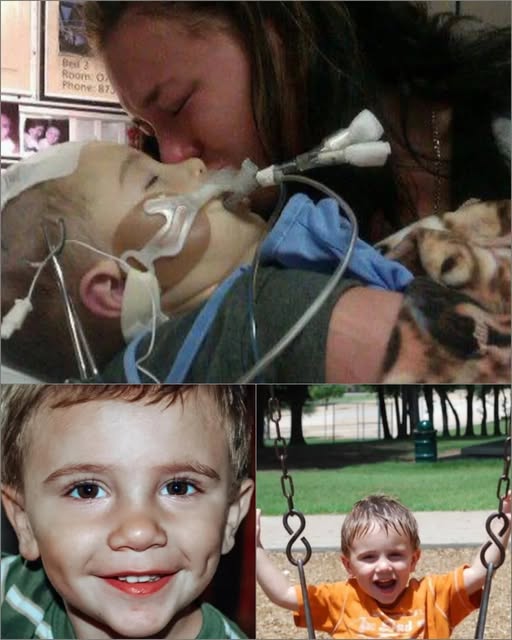
Devin Drake was only three years old, a little boy with bright eyes and a tender heart. He was a child who, like any other, deserved laughter, safety, and love. But on September 4, 2011, Devin’s life was violently and tragically cut short—his young body unable to survive the brutal abuse inflicted by his mother’s boyfriend. That day, the world lost a little boy, and the story of his suffering would later reveal a harrowing tale of neglect, fear, and unimaginable violence.
It was a day like any other, yet for Devin, it was the beginning of the end. On that morning, he was in the care of his mother, Elizabeth Moorman, and her boyfriend, Anthony Urban. Reports would later reveal that Devin had endured physical abuse long before this fateful day, but the severity of the injuries he suffered on September 4th shocked even experienced medical professionals.
The Hospital Arrival
Devin was taken to the hospital unresponsive. The moment he arrived, hospital staff immediately recognized that something was gravely wrong. His tiny body bore the marks of relentless physical abuse: bruises and abrasions covered his arms, legs, and torso. His lungs were punctured, making each breath a painful struggle. Most alarmingly, his head was severely traumatized, with a shattered skull that left no room for doubt—this was not an accident.
Doctors and nurses worked frantically to stabilize him, but it quickly became clear that Devin’s injuries were consistent with severe child abuse. Hospital staff promptly contacted law enforcement, knowing that every second mattered. It was now a race against time—not only to save a life but also to uncover the truth about how a three-year-old boy could suffer such catastrophic harm.
Conflicting Stories and Confessions
When detectives arrived to question Elizabeth Moorman and Anthony Urban, both provided conflicting and inconsistent accounts of the events. Moorman, Devin’s mother, and Urban, her boyfriend, seemed to be carefully weaving stories, each attempting to deflect responsibility and minimize the truth.
After repeated questioning, Anthony Urban admitted to striking Devin in the head. According to Urban, the boy had bitten him while he tried to take away a toothbrush. Urban claimed that he had feared Devin was choking on it and reacted impulsively. The blow to Devin’s head caused him to fall from a stool and strike a ceramic bathroom floor.
The story alone, though, could not fully explain the extent of Devin’s injuries. Hospital reports and photographs would later confirm that Devin’s bruises and trauma were widespread, far beyond a single fall. Each mark told a story of repeated violence, of a child living in fear, and of a caregiver failing to protect him.

Ignoring the Signs
Immediately after the incident, Urban told detectives that Devin began to act woozy and struggled to stand. He reported these warning signs to Moorman, who allegedly refused to take the child to a hospital. Her reason? She had outstanding warrants for her arrest and feared facing the legal consequences.
Even when Devin’s condition worsened—Urban later reported that the boy had vomited and became rigid—Moorman did not seek immediate medical help. Hours passed while Devin’s life hung in the balance. It was only later that evening that she brought him to Mercy Hospital. Even then, she gave staff varying accounts of what had caused Devin’s injuries, further delaying accurate medical treatment and justice.
The Pattern of Violence and Neglect
Anthony Urban’s criminal record revealed a pattern of risky and violent behavior. He had two felony convictions for fifth-degree drug possession, four theft-related convictions ranging from misdemeanor to felony, a check forgery conviction in 2007, and multiple traffic violations. His history suggested a man familiar with breaking rules and evading responsibility, a man whose behavior created an unsafe environment for a child.
Elizabeth Moorman herself was not without legal history. She had a misdemeanor conviction for fifth-degree possession of a controlled substance in 2007, along with two traffic violations. While these offenses were not violent, they reflected a disregard for legal responsibility that would later play a critical role in the neglect charges she faced.
The Aftermath: Charges and Legal Proceedings
After Devin’s death, law enforcement moved swiftly. Elizabeth Moorman was charged with child neglect, while Anthony Urban faced charges of first-degree assault. The charges reflected the severity of their actions—or in Moorman’s case, inaction—that led directly to Devin’s death.
Child neglect, as defined in this case, extended beyond failing to provide basic care; it involved allowing a child to remain in an unsafe environment despite clear and immediate danger. Moorman’s hesitation and delay in seeking medical attention were considered acts of neglect. Meanwhile, Urban’s violent assault and admission of striking Devin were treated as intentional and grievous acts of abuse, warranting the first-degree assault charge.
The Heartbreaking Reality of Devin’s Injuries
For medical personnel, Devin’s injuries were among the most severe they had seen in cases of child abuse. His bruises were extensive, covering nearly every part of his body, evidence of repeated blows and trauma over time. Abrasions and contusions marked places a child’s body should never endure pain.
The punctured lungs added another layer of complexity and danger. Each breath was a struggle, a reminder of the fragility of life and the devastating impact of violence on a small, developing body. The severe head trauma—the shattered skull—was the most telling sign that Devin’s suffering was not accidental. This was deliberate harm, inflicted by an adult entrusted with his care.

The Emotional Toll on First Responders
Hospital staff, detectives, and social workers involved in Devin’s case often spoke about the emotional toll of witnessing such trauma. It is one thing to read about child abuse in reports or see it on television; it is another to stand over a three-year-old boy, knowing he will not survive the night, knowing that the people responsible were those meant to protect him.
For nurses and doctors, the images of Devin’s bruised, battered body remained long after the immediate emergency passed. Detectives and social workers carried the weight of knowing they had encountered the worst of human cruelty, and yet, there was little they could do to undo the harm already inflicted.
Community Response and Awareness
The story of Devin Drake spread quickly, eliciting shock, grief, and outrage in the local community and beyond. Many were left asking how such a tragedy could occur, how a child could be beaten and neglected in the very home that should have been his sanctuary.
Community organizations, child advocacy groups, and local leaders emphasized the importance of vigilance, education, and intervention. Devin’s death became a case study in the critical need for reporting suspected abuse, ensuring that children are removed from unsafe environments, and holding perpetrators accountable.
Remembering Devin
While Devin’s life was tragically short, his story serves as a reminder of the innocence and vulnerability of children. His experience illustrates how critical it is for society to protect its youngest members and ensure that love, care, and safety are never compromised.
Family members, friends, and advocates have worked tirelessly to honor Devin’s memory. Memorials, vigils, and public awareness campaigns serve as a testament to his life and the urgent need to prevent future tragedies. His name is remembered not just for the circumstances of his death, but as a symbol of every child who deserves to live free from fear and harm.

The Legal Journey and Justice
The prosecution of Elizabeth Moorman and Anthony Urban sought to bring justice not only for Devin but also to send a message to the community about the consequences of child abuse and neglect. Court proceedings examined the details of that fateful day, Urban’s prior criminal history, Moorman’s neglectful actions, and the medical evidence that revealed the severity of Devin’s injuries.
Anthony Urban faced the full weight of first-degree assault charges, reflecting the intentionality and extreme violence of his actions. Elizabeth Moorman’s neglect charges emphasized that inaction in the face of danger is also punishable under the law, particularly when it results in the death of a child.
Reflecting on a Tragedy
Devin Drake’s story is one that resonates far beyond the immediate details of his death. It is a story of the responsibilities that caregivers hold, the consequences of violence, and the devastating impact that neglect can have on the most vulnerable.
It is also a story that calls for reflection on prevention. Every bruised child, every incident of suspected abuse, is an opportunity for intervention. Devin’s death reminds us that one moment of inattention, fear, or violence can irreversibly change a life.
A Call to Action
For communities, caregivers, and authorities, Devin’s death is a stark warning. It underscores the necessity of vigilance, reporting, and accountability. It calls for better support systems for families, education on recognizing signs of abuse, and rapid intervention when a child’s life is at risk.
Child abuse is preventable, and the loss of Devin Drake should serve as a catalyst for change. His story, while heartbreaking, can inspire action, awareness, and ultimately, protection for children who might otherwise suffer in silence.
Conclusion
Devin Drake’s life was tragically short, but his story endures. It serves as a painful reminder of the consequences of abuse and neglect, and the profound responsibility adults have to protect children. While justice sought through legal proceedings cannot bring him back, it reinforces the importance of safeguarding children and ensuring that no other child suffers as he did.
In remembering Devin, we honor every child who has been harmed, and we commit to a future where love, safety, and care prevail over fear and violence. Devin Drake’s memory is a call to protect, to act, and to never turn away from a child in need.
Though he lived only three short years, Devin’s story continues to teach us about innocence, vulnerability, and the urgent necessity of vigilance and compassion.