
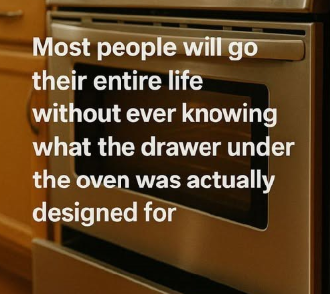
That drawer under the oven has become a quiet habit in most homes, a convenient place where baking sheets slide in and extra pans disappear, and nobody asks questions because it seems so obvious. The shape invites storage, the location feels practical, and over the years the routine hardens into certainty, as if every oven was designed with a built in hiding spot. It’s understandable, almost comforting, to believe it’s just there to hold clutter and keep counters clear. But in many kitchens, that assumption is only partly true, and the real purpose is easy to miss until you actually need it.
On many oven models, the bottom drawer is a warming drawer, built to hold cooked food at a low steady heat while the rest of the meal catches up. It’s not meant to keep cooking the food, but to keep it at a safe serving temperature so dinner stays warm without drying out while guests arrive or side dishes finish. When it’s used correctly, it can make timing less stressful, especially during holidays or multi dish meals when everything seems to be ready at different moments. The drawer turns into a quiet helper, letting you serve food warm and intact instead of rushing everything to the table at once.
The tricky part is that not every oven has a warming drawer, and not every bottom drawer is designed to heat at all. Some are true warming drawers with controls, vents, or a clear heat setting, while others are simply storage compartments with no heating element. The difference isn’t always obvious at a glance, which is why the safest move is to check the manual or look for labels and settings that mention warming, proofing, or heat. If there are no controls and no signs it’s built for temperature, it may truly be storage, but guessing is where people get into trouble.
Using a warming drawer like a storage bin can create real risk, because items inside can heat up, warp, melt, or block airflow in ways the appliance wasn’t meant to handle. Plastic, paper, dish towels, and even certain cookware can become a hazard if the drawer warms unexpectedly or if the oven’s heat radiates into that space. When the drawer is used as intended, though, it’s genuinely useful: it can keep plates warm, hold finished dishes, and in some kitchens even help with gentle tasks like proofing dough. A forgotten drawer can become a practical tool again, once it’s treated less like a hiding place and more like a feature that deserves one careful look before it’s filled.