
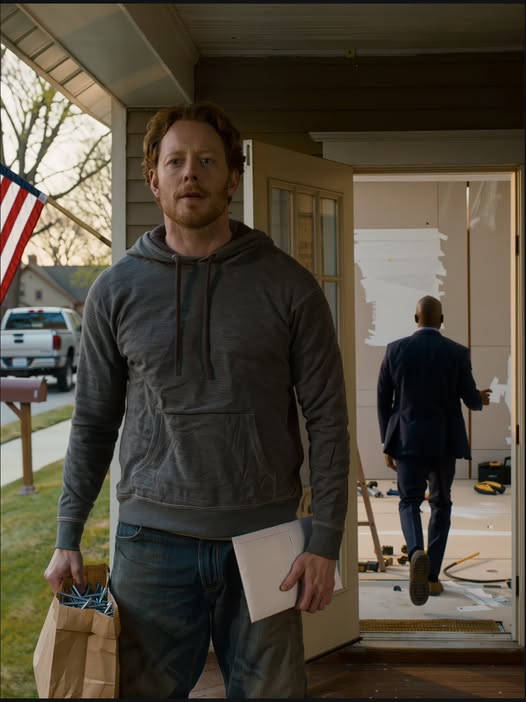
The process server caught me on my front porch. I’d just gotten home from the hardware store, a bag in my hand with drywall anchors for the guest bedroom. The house was a work in progress, but it was mine.
Bought six months ago, at twenty-one, with money I’d saved since I was fourteen. Ryan Mitchell. I set the bag down.
“Yeah?”
He handed me an envelope.
“You’ve been served.”
Then he walked away like he hadn’t just dropped a bomb on my Tuesday afternoon.
I stood there holding the envelope, feeling the official, legal weight of it. I opened it slowly.
Patricia and Donald Mitchell versus Ryan Mitchell.
My parents were suing me.
I read the first page, then the second, then went back and read them again because surely I was misunderstanding. Tortious interference with prospective economic advantage. Additional claims: unjust enrichment, fraud, breach of familial duty.
Translation: they were suing me for being successful while my older brother Tyler wasn’t.
The allegations were insane.
Defendant Ryan Mitchell deliberately manipulated family dynamics to secure unfair advantages. Defendant withheld crucial business advice and mentorship from his brother Tyler Mitchell, directly causing Tyler’s business ventures to fail. Defendant used family name and reputation to build business while sabotaging his brother’s identical efforts. Defendant received undisclosed financial support from extended family members which he has fraudulently claimed to have earned independently.
They were demanding $250,000 in damages—plus transfer of my house to Tyler as restitution for “opportunities stolen.”
I sat down on the porch steps and read it again. My phone was already ringing.
I answered, my stomach tight.
“Mom.”
“What the hell is this?”
“Don’t you dare use that language with me.
“You’re suing me.”
“You left us no choice. You’ve been selfish and cruel to your brother.”
Selfish. Selfish. I worked three jobs through college while you paid for Tyler’s private school.
I heard Dad’s voice in the background.
“Let me talk to him.”
The phone switched.
“Ryan, this is happening. You can either settle reasonably or we’ll see you in court.”
“Settle for what? What did I do?”
“You know exactly what you did. You built your little business using our family connections.”
“What connections? We’re middle class. There are no connections.”
“You sabotaged your brother. Every time he tried to start something, you were there undermining him.”
“I offered to help him. I offered to teach him basic business planning. He told me I was thinking too small.”
Mom’s voice again—she’d grabbed the phone back.
“You stole his future, Ryan. That house should be his. That business should be his.”
“You knew he was the entrepreneur in the family.”
“He’s failed three businesses.”
“You gave him $100,000 and he lost it all because you sabotaged him.”
“I was in college building my own thing. I didn’t even live in the same city.”
Tyler’s voice flared in the background, whiny and loud.
“That’s my house. I should be living there.”
“He stole my life.”
I closed my eyes.
“Tyler, you’re twenty-five years old. You live in Mom and Dad’s basement. I didn’t steal anything. I built something.”
“With our family’s help!” Tyler shouted.
“Grandpa gave you money. Admit it.”
“Grandpa’s been dead for six years. And he left us both the same amount. Two thousand dollars.”
“Liar. You got more. You must have.”
I stood up, the porch boards creaking under my shoes.
“I’m done with this conversation. Mom, you’ll be hearing from our lawyer.”
“We’re taking you to court,” Mom snapped, “and we’re going to win. You owe your brother. You owe this family.”
“I don’t owe you anything. I worked for everything I have. You gave me nothing, Dad.”
“Because you didn’t need anything,” Dad said. “You were always self-sufficient. Tyler needed support.”
“So you’re punishing me for not being a failure.”
“We’re correcting an injustice. See you in court.”
Click.
They hung up. I sat there holding the phone like it had turned to stone in my hand.
Then I called my best friend, Marcus.
“Yo, what’s up?”
“My parents are suing me for $250,000.”
Silence.
“What?”
I told him everything—the lawsuit, the claims, the demand for my house.
“Dude, that’s insane. Can they do that?”
“Apparently they can file. Winning is different.”
“This is about Tyler, right? Golden child Tyler who’s failed at everything.”
“Yeah, man.”
“Your parents are delusional. You built everything yourself. I watched you do it.”
“They’re claiming I sabotaged him. That I used family connections to succeed.”
Marcus laughed, bitter.
“Family connections? Your dad’s a middle manager and your mom’s in HR. What connections exactly?”
“What are you going to do?”
“Fight it. I’m not giving them a dime.”
“Good. They’re out of their minds.”
After we hung up, I sat on my porch and thought about the last seven years.
I was fourteen when I started working, not because I wanted to but because I asked my parents for twenty bucks for robotics club and Dad said:
“Money doesn’t grow on trees, son. You want it? Earn it.”
That same week, Tyler got $500 for some entrepreneurship camp.
I started mowing lawns that Saturday—fifteen bucks an hour. By summer’s end, I’d saved eight hundred dollars.
Tyler spent his five hundred on video games and Chipotle.
When I turned sixteen, I got a used bike from Craigslist for eighty bucks. My parents gave it to me for my birthday.
I was grateful. At least they’d gotten me something.
Two months later, Tyler turned sixteen. They bought him a brand-new Ford Mustang—$35,000.
“Tyler needs reliable transportation for internship opportunities,” Dad explained when I asked why the difference.
Tyler never had an internship.
He drove that Mustang to parties and wrecked it junior year. They bought him another car.
I biked everywhere until I was eighteen and bought my own car—a fifteen-year-old Honda Civic for $3,000 I’d saved from tutoring and computer repair gigs.
College was worse.
Tyler got into Cornell—seventy-five thousand a year. Private business school, “the best,” Mom called it.
They threw him a party—catered for a hundred people. Spent three grand celebrating getting into an expensive school he’d barely qualified for.
I got a full academic scholarship to state university. Four years, full ride, everything covered.
I told them at dinner.
“That’s good,” Dad said. “You’ve always been self-sufficient.”
That was it. No party. No celebration.
I got a text from Mom the next day.
“Congrats, sweetie.”
Tyler got a graduation party when he finished high school—another big event. Gifts, money, speeches about his bright future.
I graduated valedictorian. I got a card with fifty bucks in it.
College was four years of grinding.
I worked three part-time jobs: campus IT, tutoring, freelance web design. My scholarship covered tuition, but I needed money for rent, food, books.
I worked thirty hours a week on top of full-time classes.
I graduated with a 3.8 GPA, fifteen thousand in savings, and zero debt.
Tyler graduated from Cornell with a 2.4 GPA and $200,000 in student loans my parents had co-signed.
“The job market is tough for new grads,” Mom explained when Tyler moved back home with no job offers.
I was already working, already building.
At twenty, I started my business. E-commerce—tech accessories: phone cases, charging cables, laptop stands.
I spent six months researching suppliers, studying the market, learning logistics.
Started with $2,000 of my own money.
First year: $45,000 in revenue, $12,000 profit after expenses.
I reinvested every penny, worked eighteen-hour days—day job plus business at night.
Tyler was twenty-four then. On his second failed business venture.
The first was a food truck.
My parents gave him $45,000 to start it. He bought a fancy custom truck with an expensive logo, gourmet equipment.
He never researched permits, health codes, or locations.
Picked a terrible spot, charged too much, and failed in three months. The truck got repossessed.
“The city regulations killed his dream,” Mom said.
Nobody asked why I wasn’t struggling with the same regulations.
Then came crypto trading.
My parents gave Tyler $30,000. He watched YouTube gurus and thought he’d get rich quick.
Bought high, panicked, sold low, lost everything in six weeks.
“The market is rigged,” Dad said.
Nobody asked why some people make money in crypto and Tyler didn’t.
Then the consulting firm.
$25,000 from my parents.
Tyler rented a downtown office for three grand a month. Spent eight grand on branding—logo, website, business cards.
Had zero clients, zero expertise, zero business plan.
He called himself a “disruptive business strategist.”
Closed in four months when the money ran out.
“Corporate America is intimidated by innovators,” Mom explained.
Meanwhile, I turned twenty-one.
My business hit $180,000 in annual revenue—$65,000 in profit.
I quit my day job to focus full-time.
I found a fixer-upper house for $140,000. Put down twenty percent—$28,000 I’d saved.
Spent four months renovating it myself. YouTube tutorials. Sweat equity.
Twelve-hour days of drywall and paint.
I moved in three weeks ago.
My parents came to see it once.
“Must be nice to get lucky with timing,” Dad said, looking around.
Not congratulations. Not “we’re proud.” Not “how did you do this?”
Just luck. That was their explanation.
And now they were suing me, claiming I’d stolen Tyler’s future.
I sat on my porch until the sun set.
Then I went inside, opened my laptop, and searched for lawyers.
I found a firm—Blackwell and Associates—specialized in defending against frivolous lawsuits. The reviews were brutal in the best way.
“Destroyed my ex’s baseless lawsuit and made them pay my legal fees.”
“They don’t just win, they make the other side regret filing.”
Perfect.
I called and left a message.
“My parents are suing me for being more successful than my brother. I want to fight this, and I want them to regret it.”
The next morning my phone rang at 8:00 a.m.
“Ryan Mitchell? This is David Blackwell. Got your message. Tell me everything.”
I did—golden child dynamic, the hundred grand they’d given Tyler, the zero they’d given me, the lawsuit claiming I’d somehow stolen Tyler’s opportunities.
Blackwell listened without interrupting.
When I finished, he said, “This is one of the most frivolous suits I’ve seen in twenty years of practice.”
“Can they win?”
“Absolutely not. Their claims have no legal merit.”
“But Ryan, let me ask you something. Do you want to just win, or do you want to make a statement?”
“What kind of statement?”
“Countersue. Abuse of process. Malicious prosecution. Intentional infliction of emotional distress.”
“Make them pay your legal fees. Make this so expensive and painful they never try this garbage with anyone again.”
I thought about it for exactly three seconds.
“Let’s make an example out of them.”
“Good. I’ll need documentation—tax returns, bank statements, work records, anything proving you did this yourself.”
“I have seven years of tax returns. W-2s from every job. Business formation documents. Everything.”
“Perfect. Send it all.”
“They’re claiming fraud—that you secretly received help. We’re going to prove they defrauded the court by filing this nonsense.”
“How long until trial?”
“Six months, probably. Discovery will be interesting.”
“We’ll depose them under oath. Make them explain how you stole opportunities you never asked for.”
I smiled for the first time since getting served.
“When do we start?”
“We already did. I’m filing our response tomorrow.”
“And Ryan?”
“Yeah?”
“They think you’re still the kid who wouldn’t fight back. Show them who you became.”
After the call, I spent the rest of the day building my case.
I pulled every text message where they praised Tyler’s “vision” despite his failures. Every Facebook post celebrating his ventures.
Every family dinner where they ignored my accomplishments.
Every receipt showing I’d never received a dime from them.
By midnight I had a forty-seven-page document—a complete timeline.
Tyler received $45K food truck, plus $30K crypto, plus $25K consulting, plus $200K college loans co-signed—$300K total parental investment.
Ryan received: $0.
Tyler’s current status: $180K in debt, living in parents’ basement, three failed businesses.
Ryan’s current status: $95K net worth. Business owner. Homeowner. Zero debt.
Subject line: Evidence—How to destroy your own parents’ lawsuit.
I sent it to Blackwell, went to bed, and slept better than I had in weeks because for the first time in my life, I wasn’t taking their quiet contempt.
They wanted a war.
They were about to learn what I was capable of when I stopped playing nice.
Two weeks after hiring Blackwell, the countersuit hit.
I was at my desk fulfilling orders when my phone rang.
“Blackwell. They got served an hour ago.”
“Your mother called my office screaming.”
“What did she say?”
“That you’re an ungrateful son. That we’re monsters. That she’s calling the bar association.”
“Standard panic when people realize they’re screwed.”
“What happens now?”
“Discovery. We ask them questions under oath. Request documents. Make them prove their claims.”
“It’s going to get ugly.”
“Good.”
That evening, my phone exploded—seventeen missed calls. Twelve from Mom, three from Dad, two from Tyler.
I listened to one voicemail.
“How could you do this to us? We’re your parents. You’re countersuing us. This is elder abuse.”
Elder abuse. They were fifty-eight.
I deleted the rest without listening.
Text from Tyler.
“You’re disgusting. Hope you’re happy destroying the family.”
I blocked his number.
Text from Dad.
“This has gone too far. Drop the countersuit and we’ll drop ours. Let’s be adults.”
I replied.
“You sued me first. You started this. I’m finishing it.”
He didn’t respond.
The next day Marcus came over with beer and pizza.
“Dude, your family’s losing their minds on Facebook.”
“I’m not on Facebook.”
“I know. That’s why I’m showing you.”
He pulled up his phone.
My mother had posted:
“Heartbroken doesn’t even begin to describe what we’re feeling. We tried to help our youngest son understand family obligation, and he’s responded by attacking us legally. We only wanted him to help his struggling brother. Instead, he’s chosen money over family, praying for his soul.”
Two hundred comments—half supporting her, half calling her out.
One comment from my aunt Rachel.
“Patricia, didn’t you pay for Tyler’s college and businesses? What did Ryan get?”
Mom’s response:
“Ryan was always independent. He didn’t need help.”
Another comment from my uncle Jim.
“So you’re punishing him for being responsible?”
Mom hadn’t responded to that one.
Marcus scrolled further.
Tyler had posted too.
“My little brother is suing our parents because they asked him to help me out. I made some business mistakes, sure, but family is supposed to support each other. Instead, he’s got lawyers attacking Mom and Dad. This is what greed does to people.”
The comments were more split. Some defended him. Some asked pointed questions.
“How much money did your parents give you for your businesses?”
“Why should your brother give you his money?”
“Did he actually do anything wrong or are you just mad he’s successful?”
Tyler hadn’t answered any of those.
“They’re trying to control the narrative,” Marcus said.
“Let them. The truth will come out in court.”
My phone rang. Unknown number.
I answered.
“Ryan? It’s Aunt Rachel.”
“Hey. I saw your mom’s Facebook post. Wanted to hear your side.”
I told her everything—the lawsuit, the claims, the hundred grand Tyler had burned through, the zero I’d ever asked for.
She was quiet for a long moment.
“Ryan, I’m so sorry. I knew they favored Tyler, but I didn’t realize it was this bad.”
“Most people didn’t.”
“For what it’s worth, I’m on your side, and I told your mother that in the comments.”
“Thanks.”
“Do you need anything? Money for lawyers?”
“No, I’ve got it covered.”
“Okay, but if you do, call me.”
“And Ryan? Don’t back down. They need to learn this lesson.”
After we hung up, Marcus looked at me.
“You’ve got some family on your side.”
“At least some. Not all, but enough.”
Three weeks later, deposition started.
Blackwell called me the night before.
“Tomorrow, we depose your parents. I’m going to ask very specific questions about money. It won’t be comfortable.”
“Good.”
“Your job is to stay calm. Don’t react. Just let me work.”
“Got it.”
The deposition was at Blackwell’s office—conference room, table, chairs, a court reporter.
My parents arrived with their lawyer, some guy named Foster who looked uncomfortable from the moment he walked in.
Mom wouldn’t look at me. Dad glared.
The court reporter swore them in.
Blackwell started with my mother.
It took him exactly twenty minutes to dismantle her entire story.
“How much money did you give Tyler for businesses?”
“One hundred thousand.”
“How much did you give Ryan?”
“Zero.”
“How much for Tyler’s college?”
“Two hundred twenty thousand in loans and expenses.”
“How much for Ryan?”
“Zero.”
“What specific actions did Ryan take to sabotage Tyler?”
“He refused to help,” Mom said.
“Is Ryan legally obligated to provide free business consulting?”
“Family should help each other.”
“Did Tyler help Ryan?”
Silence.
“Mrs. Mitchell, did Tyler ever offer assistance to Ryan?”
“I don’t know.”
“You don’t know, but you’re certain Ryan sabotaged Tyler?”
“Yes.”
“Based on what evidence?”
“Tyler told us.”
“So you have no direct evidence. You’re relying solely on Tyler’s word.”
“He’s our son. Why would he lie?”
Blackwell pulled out bank statements, receipts, transaction records.
He walked her through every dollar they’d given Tyler and made her confirm on the record that I’d received nothing.
By the end, Mom was crying. Dad was furious.
Foster looked like he wanted to be anywhere else.
“That’s all I need,” Blackwell said.
Dad’s deposition was shorter—same questions, same answers, more anger.
But the facts didn’t change.
$320,000 to Tyler. Zero to me.
After they left, Blackwell leaned back in his chair.
“Well, that went well.”
“They looked miserable because they just admitted under oath they gave your brother everything and you nothing.”
“Their entire lawsuit claims you had unfair advantages. We just proved the opposite.”
“What happens now?”
“Next week we depose Tyler. That’ll be even more interesting.”
Tyler’s deposition was a disaster for him.
He showed up in an ill-fitting suit, already defensive before Blackwell asked the first question.
Blackwell started with the food truck.
“Walk me through why it failed.”
Tyler launched into a speech about city regulations, permits, an unfair system designed to crush small business.
“Did you research these requirements before purchasing the truck?”
“I knew there would be some red tape.”
“Did you obtain the necessary permits? Yes or no?”
“No.”
“But did you have a business plan? Revenue projections? Cost analysis?”
“I had a vision.”
“That’s not a business plan.”
Blackwell pulled out records showing seventeen other food trucks operating successfully in the same area during the same period.
“They all navigated the same regulations. Why did you fail?”
Tyler’s face reddened.
“They probably had more money.”
“You had $45,000 in startup capital—more than most. Try again.”
“I don’t know. Maybe they got lucky.”
Blackwell moved to crypto.
Tyler admitted he’d lost $30,000 in six weeks, based on following trends and watching YouTube videos from “experts.”
“Did you verify they were successful traders?”
“They had millions of views.”
Several people in the room tried not to laugh.
The consulting business was worse.
Tyler admitted he’d rented a $3,000 office with zero clients, spent $8,000 on branding with zero revenue, and closed after four months.
“You burned through $25,000 with no business plan, no clients, and no results. Is that accurate?”
“I was building the foundation.”
“You were spending money you didn’t have on image instead of substance.”
Then came the real question.
“Mr. Mitchell, you claim Ryan sabotaged your ventures. How, specifically?”
“He refused to help me.”
“Did you ask him for help?”
Tyler hesitated.
“I mentioned my ideas.”
“Did you explicitly ask for help? Yes or no?”
“Not in those words.”
“So Ryan sabotaged you by not volunteering help you never requested.”
“Family should help without being asked.”
“Did you help Ryan with his business?”
Silence.
“Mr. Mitchell, what did you do to support Ryan’s business?”
“I… I encouraged him.”
“How, specifically?”
“I don’t remember exact conversations.”
“Because there weren’t any. You never helped, never offered, never asked about his business.”
“But you’re suing him for not helping you.”
Tyler’s face went red.
“He had advantages.”
“Like what?”
“He’s smarter. He always got better grades.”
“So you’re suing him for being intelligent?”
“No, he just… he had it easier.”
“He worked three jobs through college. You partied. He built a business while eating ramen. You spent $100,000 failing.”
“What part was easier?”
Tyler stood up.
Foster’s voice came out quiet and sharp.
“Sit down.”
Tyler sat, breathing hard.
Blackwell closed his folder.
“One last question.”
“In your lawsuit, you claim Ryan’s house should be transferred to you. Why do you believe you’re entitled to a house you didn’t earn, didn’t pay for, and didn’t build?”
Tyler looked at me with pure hatred.
“Because it should have been mine. That’s my life he’s living.”
“Why should it have been yours?”
“Because I’m the oldest. I’m supposed to be successful. Everything he has should be mine.”
Blackwell smiled.
“Thank you. That’s all I needed.”
After Tyler stormed out, Blackwell turned to me.
“Well, that was a gift.”
“How so?”
“He just admitted under oath that he believes he’s entitled to your assets simply for being born first.”
“No judge in the country will side with that.”
“What happens now?”
“Now we wait for trial. But honestly, I don’t think it’ll get that far.”
“Why not?”
“Because Foster is going to tell them they have no case. We have testimony proving it, and our countersuit is going to cost them more than their pride can afford.”
He was right.
Three days later, Foster called Blackwell and asked to discuss settlement.
Blackwell called me.
“They want to drop everything—their suit, our countersuit. Walk away clean.”
“No.”
“No?”
“I want them sanctioned. I want the judge to officially rule their lawsuit was frivolous.”
“I want it on the record that they wasted the court’s time and mine.”
“That’s aggressive.”
“They sued me for succeeding. They tried to take my house because their golden child failed. I want consequences.”
Blackwell was quiet for a moment.
“Then all right. I’ll tell Foster no deal.”
“When’s trial?”
“Four weeks. And Ryan, they’re going to panic when they realize you’re serious.”
“Good. Let them panic.”
That night, I sat in my house—the one I’d bought myself, renovated myself, earned myself—and felt absolutely nothing.
No guilt. No doubt. No second thoughts.
They’d tried to destroy me legally for the crime of being successful.
Now they were going to learn what happens when you pick a fight with someone who has nothing left to prove and nothing left to lose.
Four weeks felt like forever and no time at all.
My parents tried everything to get me to settle. Mom left voicemails crying about how this was tearing the family apart.
Dad sent emails about being reasonable and thinking of the family’s reputation.
Tyler sent messages from new numbers I kept blocking, calling me every name in the book.
I ignored all of it.
Blackwell kept me updated on their lawyer’s increasingly desperate attempts to negotiate.
“Foster called again—third time this week. They’re willing to drop the lawsuit and pay your legal fees.”
“No.”
“Ryan, that’s $15,000 in fees. That’s a win.”
“I don’t want their money. I want a judgment.”
“You understand that means going to trial in front of a judge with your parents.”
“Yes.”
“And you’re prepared for that?”
“I’ve been preparing for this my whole life. Just didn’t know it until now.”
Two days before trial, Marcus came over.
“You sure about this, man? This is your family.”
“They stopped being my family when they sued me.”
“What if you win and they lose everything? Their savings, their reputation.”
“They should have thought about that before filing.”
“No regrets?”
I thought about it. Really thought about it.
“The only thing I regret is not setting boundaries sooner. Letting them treat me like I was less important than Tyler for twenty-one years.”
I gestured at the legal documents on my table.
“This is just the final consequence of their choices.”
“All right,” Marcus said. “I’ll be there. Front row.”
Trial day.
I wore a suit I’d bought specifically for this—navy blue, well-fitted, professional.
I looked like someone who had it together because I did.
The courthouse was downtown. Old building. Marble floors. That specific echo that makes everything feel more serious.
Blackwell met me outside the courtroom.
“Ready?”
“Yeah.”
“Remember. Stay calm. Let me do the talking.”
“The judge is going to ask you some questions. Just answer honestly. Don’t embellish. Don’t get emotional.”
“Got it.”
“And Ryan? We’re going to win.”
We walked in.
My parents were already there with Foster.
Mom looked like she’d aged five years. Dad looked angry.
Tyler sat behind them, arms crossed, glaring at me.
The judge was a woman in her sixties.
Judge Patricia Hernandez.
Blackwell had told me she had a reputation for not tolerating nonsense.
Perfect.
“All rise.”
We stood.
Judge Hernandez entered, sat, reviewed her notes.
“Please be seated.”
“We’re here today for Mitchell v. Mitchell, case number 2024 CV8847.”
“Mr. Foster, your clients filed the original complaint. Please summarize your case.”
Foster stood. He looked uncomfortable.
“Your Honor, the plaintiffs alleged that the defendant, Ryan Mitchell, engaged in tortious interference and unjust enrichment by—”
“Let me stop you there,” Judge Hernandez said.
“I’ve reviewed the depositions. The plaintiffs gave their older son Tyler over $300,000. They gave Ryan nothing.”
“And they’re suing Ryan for succeeding. Is that accurate?”
Foster shifted.
“Your Honor, it’s more nuanced.”
“Is it? Because the depositions seem pretty clear.”
“Plaintiffs spent $320,000 on Tyler, zero on Ryan. Tyler failed three businesses. Ryan succeeded.”
“Now they want Ryan to pay them $250,000. Where’s the nuance?”
“The plaintiffs believe that Ryan’s success came at Tyler’s expense—based on—”
“What evidence?” the judge cut in.
“Tyler’s testimony.”
“Tyler’s testimony that he’s entitled to his brother’s assets because he’s older.”
“That testimony?”
Foster looked at his notes, looked at my parents, looked back at the judge.
“Your Honor, families have obligations.”
“Families have obligations,” Judge Hernandez repeated, her voice flat.
“Courts enforce contracts. Do you have a contract showing Ryan owed his brother anything?”
“No.”
“Do you have evidence Ryan sabotaged Tyler’s businesses?”
“Tyler claims—”
“Claims aren’t evidence, Mr. Foster. Do you have evidence?”
Silence.
“I didn’t think so.”
She turned slightly.
“Mr. Blackwell, I assume you have a motion.”
Blackwell stood.
“Yes, Your Honor. We move to dismiss the plaintiffs’ complaint with prejudice and enter judgment on our counterclaim for abuse of process.”
“Tell me about the counterclaim.”
“Your Honor, this lawsuit was filed in bad faith. The plaintiffs have no evidence supporting their claims.”
“The depositions prove they gave Tyler every advantage and Ryan none.”
“They’re using the court system to punish Ryan for succeeding where Tyler failed. That’s textbook abuse of process.”
Judge Hernandez looked at my parents.
“Mr. and Mrs. Mitchell, do you understand what’s happening here?”
Mom stood, trembling.
“Your Honor, we just wanted—”
“Sit down, please,” the judge said.
“I’m not asking what you wanted. I’m telling you what you did.”
“You filed a frivolous lawsuit against your son because you’re embarrassed that you spent $300,000 on Tyler and he failed—while Ryan succeeded with no help from you.”
Dad started to speak.
The judge held up her hand.
“I’ve read the depositions. I’ve reviewed the evidence. This case never should have been filed.”
“Mr. Foster, you should have advised your clients of that.”
Foster looked miserable.
“Your Honor, I did advise.”
“Not strongly enough, apparently.”
She turned to her computer, typed something.
“Motion to dismiss is granted. The plaintiffs’ complaint is dismissed with prejudice.”
“Judgment for the defendant on the counterclaim.”
“The plaintiffs are ordered to pay defendant’s attorney fees in the amount of—”
She looked at Blackwell.
“What are we at?”
“Eighteen thousand four hundred, Your Honor.”
“Eighteen thousand four hundred.”
“Additionally, I’m sanctioning the plaintiffs in the amount of $5,000 for filing a frivolous lawsuit.”
“That’s payable to the court, not the defendant.”
My mother gasped. Dad put his head in his hands.
“Furthermore,” Judge Hernandez continued, “I’m ordering that this judgment be entered into the public record with a notation that this was a frivolous suit filed in bad faith.”
“Any future litigation by the plaintiffs against defendant on these same claims will result in additional sanctions.”
She looked at my parents directly.
“Mr. and Mrs. Mitchell, I understand you’re disappointed in how your sons’ lives turned out differently than you expected.”
“But your disappointment is not Ryan’s responsibility.”
“You made choices about how to allocate your resources. Tyler made choices about how to use those resources. Ryan made different choices.”
“He succeeded. That’s not a crime. That’s not tortious interference. That’s life.”
“But Your Honor—” Mom tried.
“I’m not finished.”
“You came into this court asking for a quarter million and a house your son earned himself.”
“Instead, you’re leaving with a $23,000 judgment against you and a public record showing you sued your son for succeeding.”
“I hope it was worth it.”
She banged her gavel.
“We’re adjourned.”
The courtroom was silent for a moment.
Then Tyler exploded.
“This is— he sabotaged me! Everyone knows it!”
“Mr. Mitchell,” the judge said coldly, “I suggest you leave before I hold you in contempt.”
Tyler stormed out.
My parents sat there stunned.
I stood up, adjusted my suit jacket, and walked out.
I didn’t look back.
Outside the courtroom, Blackwell shook my hand.
“Congratulations. That was about as decisive as it gets.”
“What happens now?”
“Now they have thirty days to pay the judgment. If they don’t, we can start collection proceedings—liens, wage garnishment, the works.”
“Will they pay?”
“Probably. The alternative is worse.”
“But Ryan, understand this is going to destroy your relationship with them.”
“It already was destroyed. This just made it official.”
Marcus was waiting in the hallway.
“Dude, I heard the judge through the door. She destroyed them.”
“Yeah,” I said. “She did.”
“How do you feel?”
I thought about it.
“Free.”
That evening, the fallout began.
Tyler posted on Facebook:
“The justice system is a joke. My brother spent thousands on lawyers to destroy our family. A corrupt judge sided with him because he has money. This is what America has become. Family means nothing. Money is everything.”
The comments were brutal.
“Didn’t you sue him first?”
“Corrupt judge? She just didn’t rule in your favor.”
“Maybe get a job instead of blaming your brother.”
Tyler deleted the post an hour later.
Mom posted:
“We lost in court today. Not because we were wrong, but because the system favors the wealthy.”
“We tried to teach our son about family values. Instead, he taught us that success corrupts.”
“Praying for his soul.”
Aunt Rachel commented:
“Patricia, you sued him. You lost. Maybe it’s time for some self-reflection instead of playing victim.”
Uncle Jim commented:
“You spent 320K on Tyler and $0 on Ryan, then sued Ryan for succeeding. What did you expect?”
Mom deleted the whole post.
Three days later, I got a call from Aunt Rachel.
“Ryan, your parents are in trouble.”
“What kind of trouble?”
“Financial. They refinanced the house twice to fund Tyler’s businesses.”
“Between that and the judgment, they’re looking at bankruptcy.”
“That’s not my problem.”
“I know. I’m just telling you in case they try to guilt you.”
“They’ve tried everything else.”
“How are you doing?”
“Really?” I said. “Honestly? Better than I’ve been in years.”
“Good. You did the right thing. They needed consequences.”
“Thanks, Rachel.”
A week after the judgment, I was in my workshop—the part of the garage I’d converted—when someone knocked.
I opened the door.
Tyler stood there.
“We need to talk.”
“No, we don’t.”
“Please. Just five minutes.”
Against my better judgment, I let him in.
He looked terrible—unshaven, wrinkled clothes, dark circles under his eyes.
“What do you want, Tyler?”
“I need money.”
I almost laughed.
“You’re kidding.”
“I’m serious. Mom and Dad are broke. They’re going to lose the house. I’m living in my car. I need help.”
“You need help?”
After you sued me, after you claimed my house should be yours, after you called me every name in the book.
I felt anger rise, sharp and clean.
“You were angry,” Tyler said. “You were entitled. You still are.”
“You think because you’re older—because you were Mom and Dad’s favorite—that you deserve what I built.”
“You don’t.”
“I made mistakes,” he said.
“You made choices,” I corrected. “Bad choices. Repeatedly. And now you’re facing consequences.”
“Welcome to adulthood.”
“So you’re just going to let us lose everything?”
“You lost everything on your own, Tyler.”
“Three businesses. One hundred thousand. Our parents’ retirement.”
“That’s all you.”
“I didn’t sabotage anything. You did that yourself.”
“Please,” he said. “I’m your brother.”
“No,” I said. “You’re someone I’m biologically related to who spent my entire life treating me like I was less important.”
“And now that I’ve succeeded despite you—despite them—you want me to bail you out?”
“The answer is no.”
“Ryan—”
“Get out of my house.”
“You’re really going to do this? Turn your back on family?”
“You turned your back on me the moment you sued me.”
“Now I’m just making it official.”
“Get out.”
He left.
I closed the door and stood there for a minute.
I felt nothing—no guilt, no regret, no second thoughts. Just peace.
Two months later, my parents filed for bankruptcy.
They lost the house and moved into a small apartment.
Tyler moved in with them. All three of them cramped in a two-bedroom.
The family group chat—the one I’d left years ago—apparently exploded with drama.
Rachel kept me updated, even though I never asked.
Some relatives blamed me, called me heartless, said family should stick together.
Others understood, said my parents had made their bed.
I didn’t care either way.
I was building my life.
My business hit $250,000 in revenue. I hired my first employee.
I started planning expansion, bought new equipment for the workshop, finally finished renovating the guest bathroom.
I started dating someone—Emma—who I met at a business networking event.
She was smart, funny, building her own marketing agency.
I told her about my family on our third date.
“They sued you?”
“Yeah. Because you were successful.”
“Because I was successful and their favorite son wasn’t.”
“That’s insane.”
“Yeah,” I said. “It was.”
“Do you talk to them now?”
“No. And I don’t plan to.”
“Good,” she said. “That takes strength. Or stubbornness.”
“Sometimes they’re the same thing.”
Six months after the trial, I got a letter in the mail from my dad.
I almost threw it away, but I opened it.
“Ryan, I don’t expect you to respond to this. I don’t even know if you’ll read it, but I needed to write it anyway.”
“Your mother and I were wrong about everything—about how we treated you and Tyler differently, about the lawsuit, about thinking we could force you to fix our mistakes.”
“We spent twenty-one years telling you you didn’t need help because you were self-sufficient.”
“What we were really saying was that we were too tired to help both of you, and Tyler demanded more attention.”
“That was our failure, not yours.”
“You built something incredible. You did it alone.”
“And instead of being proud, we resented you for it.”
“We saw your success as a judgment on our failures with Tyler.”
“I’m sorry. Your mother’s sorry.”
“It’s too late. I know.”
“But I wanted you to know that we finally understand what we did.”
“I don’t expect forgiveness. I don’t expect anything.”
“I just wanted you to know you were right about all of it.”
Dad.
I read it twice, then put it in a drawer.
I didn’t respond.
Maybe someday I would. Maybe someday I’d be ready to have that conversation.
But not today.
Today, I had a business to run, a life to build, a future that was entirely my own.
And that was enough.
Two years later, I was in a coffee shop reviewing quarterly reports when Tyler walked in.
I saw him before he saw me.
He looked different—thinner, tired, wearing a retail store uniform with a name tag.
His hair was cut short and practical.
None of the styled look he used to spend an hour on.
He ordered coffee, turned around, and froze when he saw me.
For a moment, neither of us moved.
Then he walked over slowly.
“Ryan… Tyler… can I sit just for a minute?”
I gestured to the chair.
He sat carefully like he expected me to change my mind.
“I’m not here for money,” he said immediately. “I just… I saw you and thought maybe I should finally say what I should have said two years ago.”
I waited.
“I’m sorry for everything. The lawsuit, the entitlement, all of it.”
“I destroyed my own life, Ryan. You didn’t do it. I did.”
He looked genuinely broken—different from the Tyler who’d screamed that my house should be his.
“I’ve been in therapy for eighteen months,” he continued. “Real therapy. The kind where you face what you did wrong instead of blaming everyone else.”
“And what did you do wrong?”
“Everything.”
He stared at his coffee.
“I spent twenty-five years thinking the world owed me success because I was the oldest, because Mom and Dad believed in me.”
“But I never put in the work. I just wanted results without effort.”
“The lawsuit was the lowest point. I actually convinced myself you’d stolen my life.”
“That’s how delusional I was.”
“But hitting bottom—losing everything, living in my car, working retail at twenty-seven—reality couldn’t be ignored anymore.”
“Where are you now?”
“Manager at the store. Paying Mom and Dad back fifty bucks a month.”
“Taking night classes in actual business fundamentals. It’ll take years, but I’m doing it right this time.”
I studied him.
This wasn’t manipulation. This was someone who’d been broken and was trying to rebuild.
“I appreciate the apology,” I said, “but I don’t know if I can have you in my life again.”
“Maybe someday. Not now.”
“I understand,” he said. “That’s more than fair.”
He stood, extended his hand.
I shook it.
“Take care of yourself, Ryan.”
“You too.”
After he left, I sat there for a while, processing.
My phone buzzed.
A text from Emma—my girlfriend of a year and a half.
“Still on for dinner tonight?”
“Yeah. 7:00 p.m. Love you.”
“Love you, too.”
That evening over dinner, I told Emma about the encounter.
“How do you feel?” she asked.
“Honestly, I don’t know. He seemed genuine.”
“Do you think you’ll ever reconcile?”
“Maybe. When he’s proven it’s real, not just when he needs something.”
“When enough time has passed that I’m sure it’s healthy.”
“There’s a difference between holding a grudge and having boundaries.”
Six months later, my business hit $500,000 in revenue.
I hired two more employees and moved into a proper office.
Emma moved in with me—gradually, naturally, our lives merging.
One Saturday, I got a call from Dad.
We’d been in minimal contact. He’d send occasional updates.
I’d read them, but rarely respond.
“Tyler got promoted to manager,” Dad said. “He says he’s really doing well.”
“He paid me back another thousand this month.”
“That’s good.”
A pause.
“Ryan, I don’t expect anything from you. But I wanted you to know your mother and I are proud of you.”
“We should have said that twenty years ago.”
My throat tightened.
“Thanks, Dad.”
“I know it’s too late,” he said, “but I wanted you to hear it anyway.”
A year after running into Tyler, I received a letter from Dad with a cashier’s check inside—$18,400.
The exact amount of the judgment.
“Tyler wanted me to send this,” Dad wrote. “Took him two years, but he paid back the full judgment.”
“He wanted you to know he’s serious about making things right.”
“No expectations. Just accountability.”
Dad.
I stared at the check for a long time.
Then I called Tyler.
“It’s Ryan. Got the check.”
“I wanted to make it right,” he said quietly. “Two years of saving, but I did it.”
“You didn’t have to. The judgment was against Mom and Dad.”
“I know,” he said, “but it was my lawsuit, my entitlement that started it.”
“I needed to take responsibility.”
“Cash the check,” he said. “Please. I need to know I did at least this one thing right.”
“Okay.”
I donated it.
All eighteen thousand to a scholarship fund for low-income kids pursuing business degrees.
Kids who’d work three jobs through college.
Kids like I’d been.
I texted Tyler.
“Check cashed. Donated to a scholarship fund. You’re square.”
His response:
“That’s perfect. Thank you.”
Emma found me in my workshop that evening.
“You donated it?”
“Yeah. Because I never needed their money. That was the whole point.”
She kissed me.
“I love you.”
“I know.”
“Are you going to talk to them? Your family.”
“Eventually. When I’m ready. When it doesn’t feel like giving up boundaries—just choosing to extend grace.”
A year later, I proposed to Emma.
Small proposal—just us, at the house I’d renovated myself.
She said yes.
We planned a small wedding: her family, our friends, Aunt Rachel, and Uncle Jim from my side.
No one else.
A month before the wedding, Dad called.
“I heard about the wedding. Congratulations.”
“I know we’re not invited. I understand why.”
“But I wanted you to know we’re happy for you.”
“Thanks, Dad.”
Six months after the wedding, Emma and I found out she was pregnant.
I waited a week before calling Dad.
“Emma and I are having a baby.”
Silence.
Then his voice went thick with emotion.
“That’s wonderful. Congratulations.”
“When the baby comes,” I said, “maybe you can visit. Meet your grandchild.”
His voice broke.
“I’d like that very much.”
“We’ll figure it out.”
Our daughter, Sarah, was born nine months later.
My parents came to the hospital quietly, respectfully.
Tyler came separately with a children’s book.
“Congratulations, man. She’s beautiful.”
“Thanks.”
It wasn’t reconciliation.
Not yet.
But it was progress—small steps, earned steps.
A year after Sarah was born, we had our first family dinner.
My house. My terms.
Emma, Sarah, and me at the center.
Mom, Dad, and Tyler at the edges—respectful, grateful to be included.
It wasn’t perfect.
Awkward silences. Uncomfortable moments.
But it was a start.
After they left, Emma and I cleaned up.
“How do you feel?” she asked.
“Okay,” I said. “It was okay.”
“Think you’ll do it again?”
“Maybe,” I said. “In small doses.”
Later that night, I stood in Sarah’s nursery watching her sleep.
My daughter growing up in a house where she’d be seen, valued, celebrated for who she was—not compared to a golden child sibling.
I thought about the lawsuit, the trial, the years of hurt.
And I realized something.
The best revenge wasn’t destroying them.
It was building a life so good their validation didn’t matter anymore.
And then, when I was ready—when they’d earned it—letting them back in, not because I needed them, but because I chose to.
That was power.
That was peace.
That was real success.