
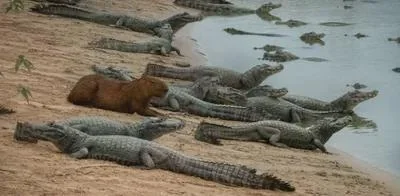
It is one of the most viral sights on the internet: a fluffy, oversized rodent sitting peacefully amongst a group of apex predators. At first glance, it looks like a disaster waiting to happen. However, the “truce” between capybaras and crocodiles (specifically caimans in South America) is a fascinating mix of biology and behavior.
1. Energy Conservation
Crocodiles and caimans are cold-blooded ectotherms. They don’t need to eat every day. If they have recently eaten a large meal, they will often ignore potential prey to save energy. Attacking a large capybara requires a massive burst of energy that a “full” crocodile simply isn’t willing to spend.
2. Size Matters
While a large caiman can certainly take down a capybara, they usually prefer smaller, easier targets like fish, birds, or smaller reptiles. A full-grown capybara can weigh up to 65kg, making it a difficult and risky struggle for a medium-sized caiman.
3. The “Social” Nature of Capybaras
Capybaras are incredibly calm and non-threatening. They don’t exhibit “prey behavior” (like panicking or splashing), which often triggers the hunting instinct in predators. By remaining still and calm, they effectively stay off the crocodile’s immediate radar.
4. Mutual Benefits?
While not a formal “symbiotic” relationship, capybaras often act as a sentinel. Their high vantage point and keen senses mean they are the first to notice other predators (like jaguars). If the capybara jumps into the water in fear, it alerts every other animal nearby—including the crocodiles—that danger is close.
Conclusion While it’s not a guaranteed safety pass—capybaras do occasionally get eaten—the sight of them chilling together is usually a result of the crocodile being too tired or too full to care about a giant, furry neighbor.