
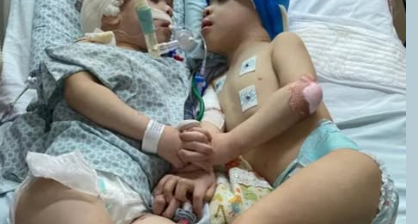
In a landmark medical achievement that has captivated the world, Brazilian conjoined twins Bernardo and Arthur Lima, nearly four years old, have successfully undergone a 27-hour surgery to separate their heads and brains. The intricate procedure, considered one of the most complex neurosurgical operations ever performed, involved nearly 100 medical professionals, including surgeons, nurses, anesthetists, and specialists from Brazil and the United Kingdom.
Born in Brazil with a rare condition known as craniopagus twins, Bernardo and Arthur shared a portion of their skulls and even some brain tissue. This type of conjoining occurs in roughly one in every 60,000 births, and only five percent of these cases involve the head, making the Lima twins’ condition exceedingly rare. For families affected by this extraordinary condition, survival itself is a challenge. The medical team emphasized that while the surgery had high risks, the potential rewards were life-changing—granting each child the possibility of living as an independent individual.

The Early Years: A Life of Uncertainty
From the moment Bernardo and Arthur were born, their parents faced a daunting reality. The twins were delivered at full term but immediately required specialized neonatal care. Doctors explained that conjoined twins with fused cranial structures often face severe complications, including developmental delays, neurological impairments, and a high risk of premature death. Despite the challenges, the Lima family embraced their children with unwavering love, determined to give them every possible opportunity for a normal life.
Over the first three years, the twins underwent numerous preliminary surgeries designed to prepare their bodies for separation. These operations focused on gradually reshaping the shared skull, implanting titanium plates for structural support, and ensuring sufficient blood flow to each brain. Each surgery carried significant risks, and the parents watched nervously as their children recovered from each procedure, aware that a single complication could have catastrophic consequences.
Bernardo and Arthur, however, demonstrated remarkable resilience. Their personalities began to emerge even while sharing a single cranial structure. Bernardo was described as calm and observant, while Arthur displayed a mischievous streak and a keen curiosity about the world around him. The twins shared a profound bond, often communicating through subtle gestures and expressions, but their parents longed for the day when each child could experience individuality fully.
Planning the Landmark Surgery
The decision to proceed with the full separation was not taken lightly. Dr. Noor ul Owase Jeelani, a pediatric neurosurgeon from the Great Ormond Street Hospital in London, led the international surgical team. Jeelani, who has dedicated years to separating conjoined twins, noted that each craniopagus case is unique, requiring extensive planning and meticulous coordination.
For the Lima twins, the challenge was amplified by the complexity of shared brain structures and the presence of scar tissue from previous surgeries. The team spent months preparing, creating highly detailed three-dimensional models of the twins’ skulls and brains using CT and MRI scans. Advanced virtual reality (VR) simulations allowed surgeons from multiple continents to collaborate in a shared digital environment, rehearsing each stage of the operation.

“Working in VR gave us an unparalleled view of the twins’ anatomy,” Dr. Jeelani explained. “It allowed us to plan every incision, every resection, and every step of the separation in a risk-free space. When we finally entered the operating theater, we were able to operate with precision and confidence.”
This innovative use of technology was critical. Craniopagus twins present extraordinary risks during surgery. Complications such as massive blood loss, brain swelling, or neurological deficits are common, and even minor errors can have devastating consequences. By rehearsing in VR, the team could anticipate challenges and develop contingency plans, effectively rehearsing the impossible before it became reality.
The Surgery: 27 Hours of Intense Precision
On the day of the surgery, the twins were anesthetized simultaneously, with dedicated anesthesiologists monitoring each child’s vital signs. Teams of surgeons, each specialized in neurosurgery, craniofacial reconstruction, and vascular repair, worked in shifts around the twins, performing synchronized procedures.
The operation began with the careful removal of scar tissue and the preparation of the shared cranial bones. Titanium plates and 3D-printed implants were used to reconstruct and support each child’s skull after separation. The most delicate portion involved the division of shared brain tissue and the re-routing of blood vessels to ensure that each brain maintained proper perfusion.
“Every minute mattered,” recalled one Brazilian surgeon involved in the operation. “We were literally navigating through the brain, separating shared veins and arteries, while maintaining oxygenation and preventing swelling. There was no margin for error.”
The surgery continued for 27 consecutive hours, with brief rest breaks for surgeons and staff. Dr. Jeelani took only 45 minutes during the operation to eat and drink. Exhaustion was universal, but so was focus. The team was acutely aware that their efforts were giving Bernardo and Arthur a chance at independent lives.
During the final stage of the surgery, craniofacial reconstruction was performed to shape the twins’ heads and provide each child with a normal skull contour. Once complete, the surgeons allowed themselves a moment to breathe, knowing that the most perilous part—separating the brain—had been successfully accomplished.
Recovery and Rehabilitation
After the surgery, the twins were transferred to a specialized pediatric intensive care unit, where their vital signs were closely monitored. Both children were stabilized, though they faced months of post-operative care, including physical therapy, occupational therapy, and neurological monitoring.
For the first few days, blood pressure and heart rate remained elevated, as the twins adjusted to their newly independent circulation and cranial structures. When the medical team allowed Bernardo and Arthur to touch hands four days after surgery, the emotional release was profound, with tears and laughter filling the hospital room. The parents described the moment as “bittersweet,” celebrating the success while acknowledging the difficult recovery ahead.
The surgical team has projected that full rehabilitation will take approximately six months. During this time, the twins will undergo therapies to strengthen motor skills, improve coordination, and support neurological development. While challenges remain, early indications are positive. The twins are responding well to care, and their prognosis is hopeful.
A Rare Medical Feat
The separation of craniopagus twins is among the rarest and most complex procedures in modern medicine. Only about 50 cases of head-conjoined twins are born each year worldwide, and fewer than a third survive beyond the first month of life. Among those, very few undergo successful separation, particularly at an older age like Bernardo and Arthur.
Dr. Jeelani emphasized the historical significance: “This is one of the oldest pairs of craniopagus twins ever successfully separated. Their age and the complexity of shared tissues made this an extraordinary challenge. Success required not only medical skill but unprecedented collaboration across borders and specialties.”
The use of VR, international collaboration, and meticulous preoperative planning demonstrates the evolution of pediatric neurosurgery. It also provides hope to families facing similarly rare conditions, showing that with innovation, determination, and teamwork, seemingly impossible feats can be achieved.
Family and Community Response
For the Lima family, the surgery’s success has been life-changing. Their gratitude towards the surgical team, hospital staff, and supporting organizations is profound. The twins’ parents have spoken publicly about the emotional rollercoaster leading up to the surgery, describing months of anxiety, sleepless nights, and moments of doubt.
“Seeing Bernardo and Arthur separated is surreal,” said their mother. “They can now experience their own lives individually, and though the journey ahead is long, we finally have hope that each will be able to grow, learn, and play as independent children.”

The operation also highlights the role of charitable organizations, particularly Gemini Untwined, which sponsored the surgery and provided logistical and financial support. These organizations enable access to cutting-edge medical expertise and technology, particularly for families in countries where such procedures might not otherwise be feasible.
Medical and Ethical Considerations
Separating craniopagus twins raises complex ethical questions. Decisions involve weighing the risks of surgery against the potential for a better quality of life, balancing parental hopes, and considering long-term outcomes. In the case of Bernardo and Arthur, the twins had already undergone multiple preliminary surgeries, which helped prepare their bodies for separation but also increased the complexity due to scar tissue and altered anatomy.
The medical team consulted extensively with bioethicists, pediatric specialists, and the family to ensure that all potential outcomes, including complications, were carefully considered. The parents’ involvement in every stage of planning underscored the importance of informed consent and collaborative decision-making in high-stakes pediatric care.
Looking Ahead
As Bernardo and Arthur continue their recovery, the world watches with admiration and hope. Their story is more than a medical triumph; it is a testament to human ingenuity, resilience, and compassion. While the journey of rehabilitation will be long and challenging, the successful separation provides a foundation for each child to grow independently, pursue their own interests, and experience life as a unique individual.
The Lima twins’ successful surgery is a milestone in pediatric medicine, offering hope to families facing similar rare conditions. It demonstrates how international collaboration, technological innovation, and meticulous planning can transform lives, even in the most complex and high-risk medical scenarios.
For Bernardo and Arthur, every day now represents a new chapter—one in which they can explore, learn, and live as individuals, finally free from the physical limitations imposed by their conjoined birth. Their story will inspire generations of medical professionals, families, and children around the world, reminding us that even the rarest and most daunting challenges can be overcome with courage, innovation, and unwavering dedication.