
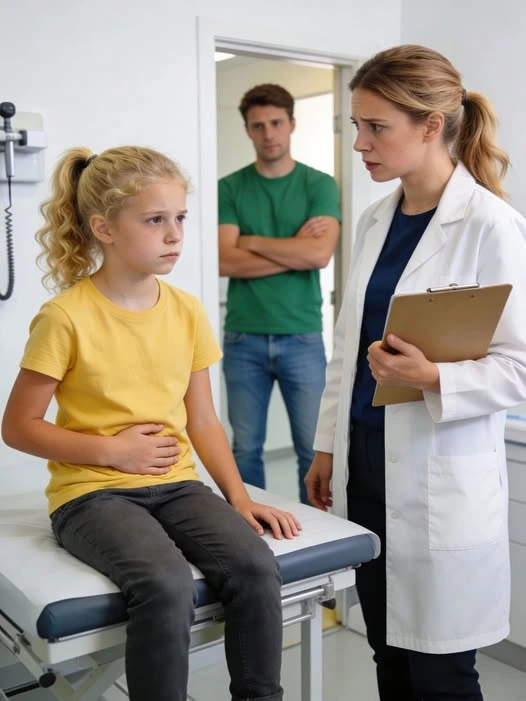
For weeks, my fifteen-year-old daughter had been telling me that something felt wrong inside her body, and what frightened me most wasn’t only the pain she described, but how easily it was dismissed by the one person who should have shared my urgency. Maya had never been dramatic. She wasn’t the kind of teenager who exaggerated for attention or searched the internet for symptoms just to panic herself. She hated missing school, hated being fussed over, hated appearing fragile in any way.
That was why the changes caught my attention so quickly. She stopped finishing meals and pushed her plate away with a faint apology. She pressed her palm against her lower abdomen after eating, not theatrically, just instinctively, like someone bracing against something invisible. Her skin took on a dull pallor that sleep didn’t fix, and by late afternoon she often folded inward on the couch, eyes half-closed, as if simply existing required effort. When she asked me one evening whether nausea was supposed to last “this long,” the way she phrased it—careful, uncertain, almost embarrassed—made my chest tighten. I listened. I watched. I kept mental notes. My husband, Richard, did not.
The first time I suggested seeing a doctor, he didn’t even look up from his laptop. He said she was overreacting, that teenagers absorbed symptoms online like sponges, that it was stress or hormones and I shouldn’t turn it into drama. The second time, he sighed deeply, like I’d brought him an inconvenience instead of concern, and reminded me how expensive hospitals were. “She just wants an excuse to stay home,” he said.